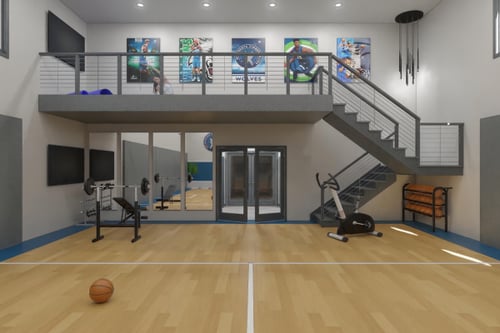
What Makes a Home Gym Feel Like a Retreat, Not an Afterthought
For years, home gyms were whatever space was left over: a room in the basement, a corner of a guest room, a yoga mat hidden under a bed.
A split-level home can present a unique accessibility challenge as you age. With their characteristic stair-heavy design, an unmodified split-level home can be difficult to navigate for homeowners or guests with mobility needs. As we age, this difficulty makes it difficult to get around your own home.
If you want your split-level home to be your long-term home, invest in these modifications to improve mobility access.
Related Content: Practical Home Changes for Aging in Place and Accessible Living
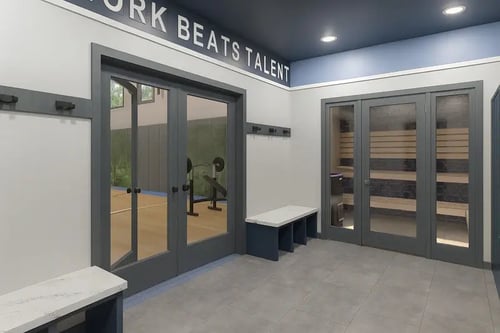
One of the most common trouble areas in a split-level home is the entryway. This is one of the key areas to focus on when modifying your home for aging in place. It depends on your home’s layout, but the best option is usually an addition onto the front entry. This gives you more room to work with to expand the staircase area, add in a lift (if applicable), and create a larger mudroom area with benches and storage.
You also want to look at the exterior as well. Wider entry doors with a ramp make it easier for everyone to access the home. This advice is focused on your front door, but you want to look at all entry points as well - for example: you may want to build a shallow ramp from a patio door threshold to a deck so it’s easier to get outside.
Split-level homes typically have more stairs than your standard one or two story home. These need to be addressed to improve accessibility in your home. There are many upgrades to consider:
Because each home is unique, the best way to identify what will work best for your home is to contact an experienced home remodeler. At Titus Contracting, we’ve worked with homeowners all across the metro to modify their split-level homes.
Related Content: Split decision? 20 tips for modernizing your split-level home
Having more room to maneuver in both your main bedroom and a connected bathroom are essential as we age - especially if a home health aid will be providing assistance. If you already have a connected bathroom, expand it to create more room. If there isn’t a connected bath, now is the time to add one.
When remodeling the bath, consider some accessible upgrades:
For the main bedroom, you’ll want to focus on creating clear pathways. Add additional room around the bed and closet areas for improved use.
While remodeling your split-level home, you can make some layout improvements. One of the first places we start is with the laundry room - in many split-level homes, the laundry room is in the basement. We want to move it to the main level for better access.
Additionally, consider removing the walls between the kitchen and living room or dining room. This improves connectivity and makes it significantly easier to move around. Take this opportunity to swap out the flooring as well. Luxury vinyl is a great option - it creates a smooth and even surface, but is less slippery than traditional wood.
With the right planning and thoughtful modifications, your split-level home is ready for a comfortable, secure, and independent future. With the help of experienced remodelers like Titus Contracting, you can transform your home into a space that supports your accessibility needs for years to come.
 Free Home Remodeling Guide:
If you’re planning a home renovation, you’ll need a licensed contractor in your corner.
Someone to bring your plans to life, handle necessary permits, and ensure everything’s up to code.
But do you need an interior designer for a home remodel?
What types of building projects require an architect?
Learn more about the role of a general contractor and what you can expect.
Titus Contracting is a full-service remodeling company offering commercial and residential construction. We have an office in Burnsville, Minnesota and work throughout the Twin Cities.